
Nothing Moves the Needle
Not that long ago, the press could root out corruption, topple presidents, and end wars. Now, even the biggest scoops have little impact. Here's how and why the media lost its mojo.


Nothing moves the needle.
Lord knows, I’ve tried. But nothing moves the needle anymore.
I was in college when Seymour Hersh exposed the slaughter of hundreds of unarmed men, women, and children by American soldiers in the small Vietnamese hamlet of My Lai. For the millions of Americans who had been told that the US was fighting a heroic battle against communism, the My Lai Massacre was a gory refutation of our noblest ideals and showed that even true-blue American soldiers were capable of committing Nazi-like atrocities.
That moved the needle.
In June, 1971, just as I was graduating and getting my start in journalism, The New York Times published the Pentagon Papers demonstrating, among other things, that Lyndon B. Johnson’s administration had “systematically lied, not only to the public but also to Congress” about the Vietnam War.
That moved the needle.
Not long afterwards, Bob Woodward and Carl Bernstein exposed Richard Nixon’s sprawling dirty-tricks operations known as Watergate. Nothing could have done more to infuse journalism with a powerful sense of mission. Pavement-pounding ink-stained wretches were transformed into heroic truth seekers dedicated to preserving democracy. Along with the rest of the country, I watched Watergate take down a president in real time.
Those stories didn’t just move the needle. They made news — they changed what Americans believed, and then they changed what the country did.
They changed history.
I loved it.
But the power to make those changes was not the result of good reporting alone. When the framers wrote freedom of the press into the First Amendment, they were assuming that if journalists revealed what the powers that be weren’t telling us and wanted to hide, the citizenry would do the rest. Voters would form judgments, demand accountability, vote accordingly, and, as a result, their grievances would be redressed.
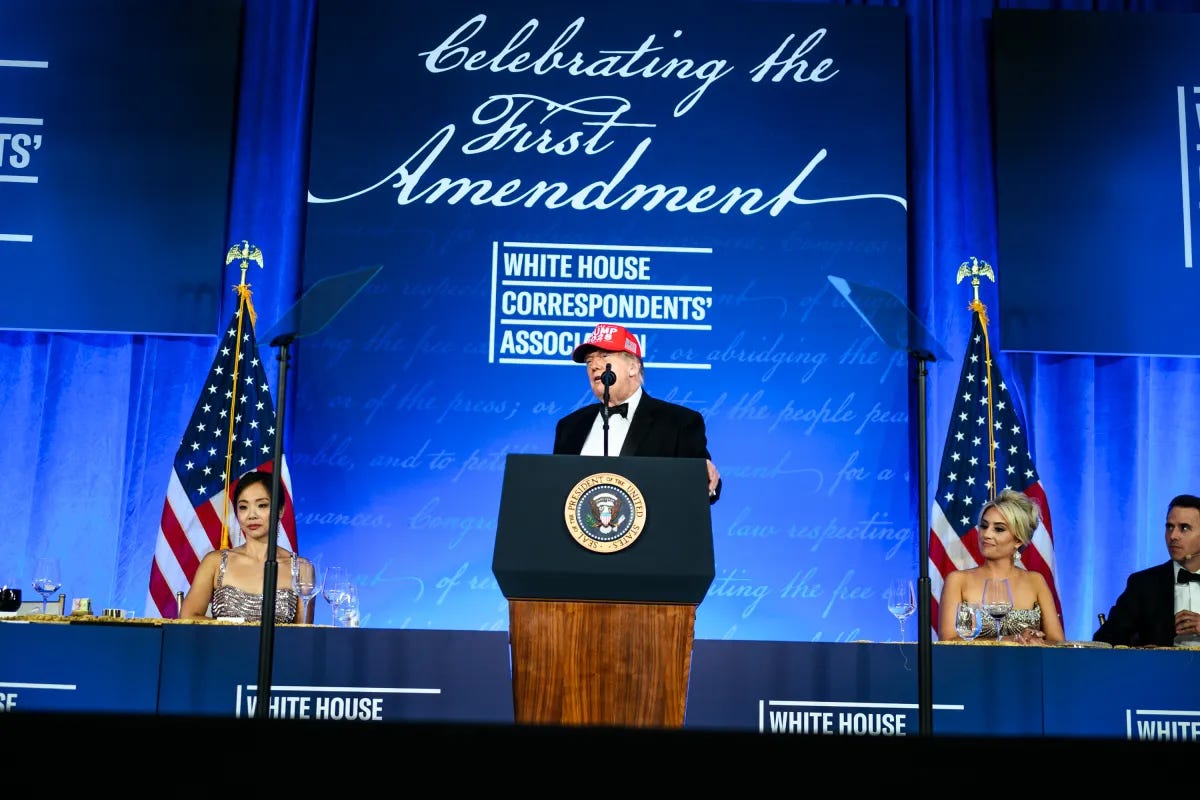
This is why freedom of the press won such a prominent place in the U.S. Constitution. The press only needed to establish relevant facts. Everything that happened after that—outrage, investigation, consequences — was supposed to happen on its own, because it assumed a public that shared enough of a common reality to recognize a damning fact when reporters handed them one, and it assumed that the checks and balances built into our system of government would do the rest.
Our so-called free press can no longer do what it used to do. That’s because it presumes an audience that shares the same factual reality most of us see. And that audience, a national citizenry that shares the same set of facts, no longer exists.
That assumption is vital to why “freedom of the press” is worth defending. But it’s also an assumption that is now completely broken and has no validity. You can tell the whole world that you believe in a free press—and I do, of course, more than ever. But our so-called free press can no longer do what it used to do. That’s because it presumes an audience that agrees, at minimum, on factual reality as most of us see it. And that audience, a national citizenry that shares the same basic set of facts, no longer exists.
Critics of Trump, for example, will find that their posts are heavily suppressed on Elon Musk’s X(formerly Twitter)—in my case, by a factor of several hundred, thanks to algorithms that are heavily biased towards MAGA. Like countless others, I’ve been “shadow-banned.”
Even at its best, the reach of information via social media is determined by “likes”— not whether it is true or vitally important. A Washington Post headline on June 19, 1972—“GOP Security Aide Among Five Arrested in Bugging Affair”—might well not have gone viral in today’s world. It was the first Woodward and Bernstein article about Watergate.
Tens of millions of Americans now live inside their own impenetrable silos, talking to each other(but not to outsiders) about information and disinformation that has been deliberately engineered to be aligned with a desired political outcome. Defending “freedom of the press” in that context is like competing in a game against opponents who won’t play by the rules.
That’s why nothing moves the needle. The public’s response to Trump scandals has flatlined. It’s dead. A large majority of Americans disapprove of him—but not enough to spark political action.
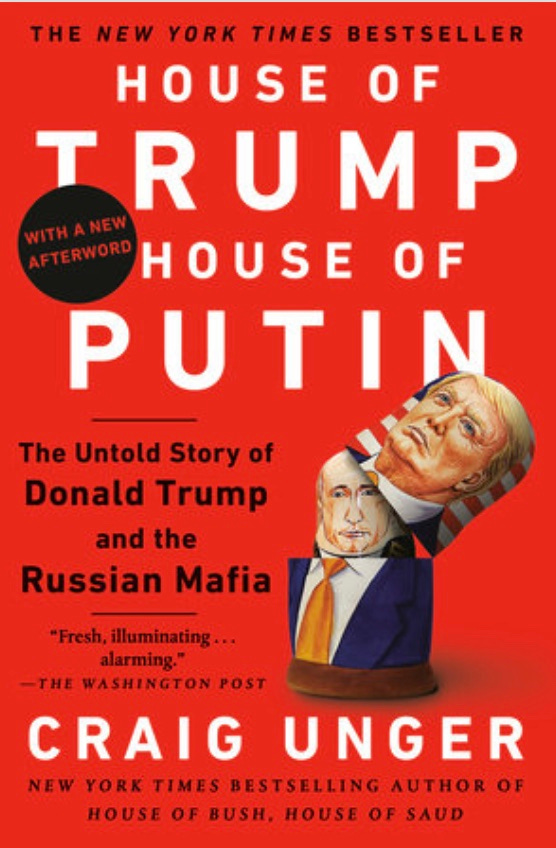
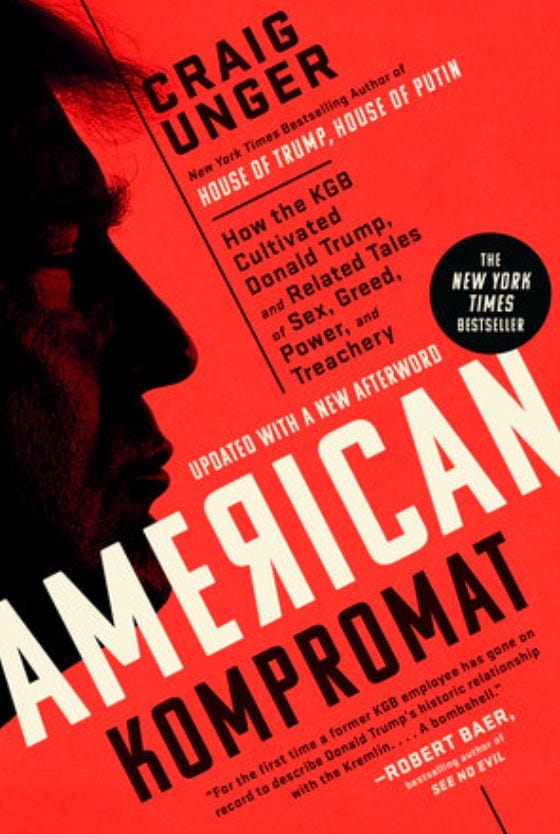
I’ve written two bestselling books and dozens of articles laying out, in detail, just how corrupt Donald Trump is. In House of Trump, House of Putin, I showed how the Russian Mafia used Trump real estate to launder hundreds of millions of dollars. In American Kompromat, I showed how he was cultivated by Russian intelligence in the Eighties, sent to Moscow by the KGB, and went on to implement active measures put together by the Russian services.
Of course, there’s been loads of great investigative reporting about Trump—from the New York Times, Bloomberg News, the Wall Street Journal, and more. Amazon lists more than 20,000 books about Trump. Thanks to a variety of scams, crypto and otherwise, Trump has already “earned” billions more in just the first year and a half of his second administration. His latest scandal has him selling advanced access to his market-moving Truth Social posts—for $100,000 a month, no less—allowing to make yet another fortune, this one by monetizing insider trading!
Of course, in 1974, any one of these scandals would have ended his presidency. But today, they have the lifespan of a mayfly.
Trump is an asset of Russian intelligence.
Ho hum.
He’s been convicted on 34 felony counts.
Yawn.
Since his second term began, Trump has personally taken in $2 billion, and, according to Forbes, his extended family (including son-in-law Jared Kushner) has nearly doubled its net worth to $10 billion.
Wake me later.
In the old days, the media had so much power that politicians were warned to “never pick a fight with people who buy ink by the barrel,” as an old adage had it.
That was the American way.
But now, not so much.
So, what happened? How on earth did the press become so enfeebled?
First, quite apart from Donald Trump, the media has been radically transformed in recent decades. True, the three major networks (ABC, CBS, NBC) that dominated TV back in the Seventies are still around, but only as a minuscule part of the media. As cable TV proliferated throughout the Nineties, hundreds of channels became available all over the country. By the Aughts, there were hundreds of millions of websites on the Internet—all of which had the apparent advantage of creating a media ecosystem that accommodated an enormous variety of different voices.
But at the same time new technologies were shattering the media into thousands of fragments, corporate ownership of its various platforms was consolidating, with billionaire oligarchs seizing control of key media organizations and steering them abruptly towards the right—particularly during Trump’s ascent. Elon Musk’s 2022 takeover of Twitter, and his transformation of it into a gargantuan bullhorn for MAGA, effectively served as a $44 billion campaign contribution to Trump two years before the fact.
Elon Musk’s 2022 takeover of Twitter, and his transformation of it into a gargantuan bullhorn for MAGA, effectively served as a $44 billion campaign contribution to Trump two years before the fact.
But that was just the start. Trump’s reelection in 2024 triggered the most ferocious assault on the American press ever mounted from the White House — and the opening shots were fired before he even took office. Indeed, in October, just a few weeks before the election, Washington Post owner Jeff Bezos blocked his paper’s planned endorsement of Kamala Harris. In response, roughly 250,000 Post readers abruptly canceled their subscriptions in protest of the spiked endorsement.
Then, on October 31, just a few days before the election, Trump filed a $10 billion lawsuit (later amended to $20 billion) against CBS News, alleging that “60 Minutes,” the most successful investigative show in the history of television, had deceptively edited a Kamala Harris interview to help her campaign.
In December 2024, while Trump was still only president-elect, Disney/ABC caved first: it paid $15 million toward his future presidential library, plus $1 million in legal fees, and aired an on-air apology to settle Trump’s defamation suit over a claim by George Stephanopoulos that Trump had been “found liable for rape.” (The actual verdict was “sexual abuse” in a civil trial. A judge later called it “substantially equivalent to rape as commonly understood,” just not as New York state law narrowly defines the crime.)
One by one, the giants of American media got down on their collective knees and groveled.
And so it went. One by one, the giants of American media got down on their collective knees and groveled. After Trump was inaugurated on January 20, 2025, the pressure on CBS intensified. By Spring, two of its top executives quit rather than watch the network cave. But fold it did. That July, Paramount paid $16 million towards Trump’s presidential library—timed precisely to coincide with the FCC’s pending review of Paramount’s merger with Skydance. When the merger closed the following month, David Ellison’s Paramount Skydance Corporation took over CBS.
Anyone who spoke out against it put his career at risk. When CBS’s Stephen Colbert, host of The Late Show, called the settlement “a big, fat bribe” on the air, CBS abruptly announced the cancellation of his show—even though it was the highest-rated program in late night.
CBS wasn’t alone. In September, ABC’s Jimmy Kimmel was briefly suspended thanks to a monologue about Charlie Kirk’s killer. In February 2026, Bezos’s Washington Post cut roughly a third of its remaining staff. That same month, Paramount, which had already paid off Trump, “murdered” 60 Minutes, and canceled Colbert, won a $111 billion bidding war for Warner Bros. Discovery, the owner of CNN. (Thanks to lawsuits from 12 Democratic state attorneys general, that prospective merger is in jeopardy, but if it were to proceed, it would put CNN’s independence in peril as well.)
Trump’s war against the media continued. He took on the BBC in court in Miami. He targeted the New York Times and Penguin Random House in Tampa. And he eviscerated journalists at the annual White House Correspondents’ Association dinner.
One reason that all this came to pass has to do with the unseen force that I first wrote about ten years ago, but which remains unacknowledged by the so-called legacy media. War is generally defined as armed conflict. But now, Russia has attacked the sovereignty of America and other Western nations—a Virtual World War III, if you like—and almost no one has reported on it. That’s because this is war by other means, a war without bombs, bullets, or boots on the ground, a new, sophisticated, asymmetric hybrid form of “nonlinear” warfare consisting of covert operations, active measures, disinformation, and cyberwarfare.
It is a war in which Russia hacks its adversaries, and uses third parties, such as Wikileaks and MAGA-adjacent influencers, to make it seem as if provocative reports had emanated from highly principled whistleblowers or industrious citizen journalists rather than Russian intelligence. It is a war in which Russia hijacked social media and created algorithms to make false but highly inflammatory reports go viral, in which Russia transformed Facebook, X, and other platforms into the biggest purveyors of Russian propaganda on the planet.
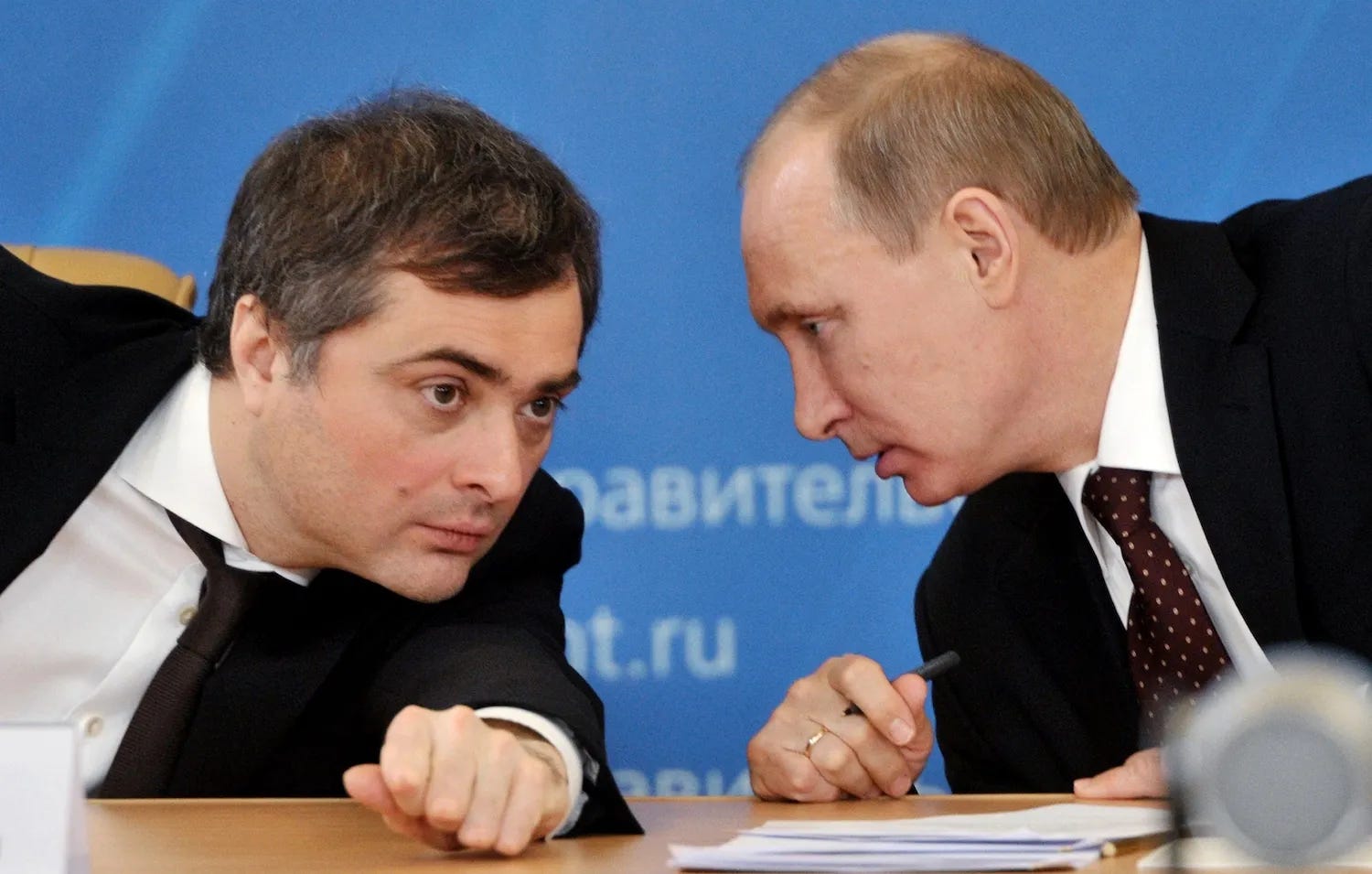
As I wrote in House of Trump, House of Putin, if there was one key architect of this strategy, it was Vladislav Surkov, the Kremlin strategist who spent the 2000s perfecting hybrid warfare inside Russia itself before exporting it. Surkov’s innovation wasn’t propaganda in the traditional sense of telling one lie and repeating it until it stuck. He founded multiple contradictory political movements simultaneously — pro-Kremlin youth groups like Nashi alongside supposed opposition parties — so that no Russian citizen could locate solid ground to stand on, because every position on the spectrum turned out to have a Kremlin hand somewhere behind it.
As the Kremlin’s grey cardinal, Surkov was the brilliant puppet master who merged theatrical techniques with PR to alter the way reality is perceived in Putin’s Russia. As such, he became one of the architects of hybrid warfare, and set out to destroy the very idea of reality, to undermine the whole notion of truth in order to create a never-ending conflict about perception that helped Putin’s regime control and manage Russia. He wasn’t selling a narrative. He was making the entire idea of a reliable narrative feel naive. The result of Surkov’s work was that it completely befuddled the opposition because the ceaseless flood of contradictory stories meant that no one knew what the enemy was up to or even who they really were, or what was going on.
And so, when it began attacking the US, just before the 2016 elections, Russia’s Internet Research Agency — a troll farm in St. Petersburg— didn’t invent a new method. It merely industrialized Surkov’s domestic playbook and aimed it at a country with no immune system for it—the United States. The clearest illustration isn’t abstract: the IRA organized both a pro-Trump rally and a counter-protest, at the same place and time, in Houston in May 2016 — manufacturing both sides of a street confrontation among real Americans who had no idea the same operation was staging them against each other. That is Surkov’s method, exported and automated.
None of this is speculative. The Mueller Report and Volume 5 of Senate Intelligence Committee’s 2020 findings — written under Marco Rubio as the committee’s acting chairman — documented real coordination between the 2016 Trump campaign and Russian intelligence. That’s not a theory. That’s the official record. What’s happened since is the payoff: a Republican Party that has largely stopped treating Kremlin-aligned talking points as disqualifying, and a pipeline — tracked in detail by researchers like Renee DiResta at Stanford — that launders Russian-state narratives into American conservative media until nobody can quite trace where a given talking point originated. It doesn’t matter anymore whether it started in Moscow. It’s ours now. There’s an old Soviet intelligence term for what Surkov practiced: reflexive control — shaping what an adversary believes to be true so thoroughly that the adversary defeats itself, freely, without ever feeling coerced.
The ascent of social media made Surkov’s method exponentially more effective. It led to the creation of thousands of siloed news platforms governed by algorithms which grew increasingly impenetrable. Before long, Russia and its American assets—knowingly or otherwise— began promoting so many conflicting and contradictory narratives that it was impossible for a single shared narrative to dominate the whole culture.
So that’s what I mean when I say freedom of the press doesn’t work anymore—at least, not the way we always assumed it did. It isn’t that the First Amendment stopped protecting reporters, or that fewer scoops are landing. It’s that Surkov’s method, and its automated heirs, did the one thing capable of neutralizing the whole system: they got to the audience before factual reality did.
It’s worth emphasizing that even the best investigative reporting, when their revelations do land, doesn’t work the way it used to. The press didn’t bring down Nixon by itself. It took two years, and what actually ended his presidency wasn’t newspaper outrage — it was the discovery of tapes with an eighteen-minute gap, plus a delegation of Republican senators walking into the Oval Office to tell him he no longer had the votes to survive. In other words, there was still a mechanism of checks and balances populated by institutional actors who were willing to act on what the reporting proved.
Today, that mechanism is gone. The Republican Party made a standing decision, sometime around 2016, not to be moved by evidence regardless of its weight — and nothing I or anyone else publishes can act on a senator who has already decided he isn’t listening.
So that means you can still report the truth. You can still publish it, defend it, and win lawsuits over it. But you can no longer assume is that there’s a readership on the other end that shares enough of a common reality to appreciate what it really means — or a class of officials still willing to act on it.
The ground journalism was built to stand on stopped being solid under everyone at the same time. Russia showed the way. Silicon Valley, left unregulated, built social media into a powerful amplifier. Trump and the media executives who bent to him finished the job. Together, they dissolved the ground journalism was built to stand on — for everyone, at the same time.
* * *
I don’t actually think nothing will ever move the needle. I think something will — but it probably won’t be a story I write.
As the midterms approach and Trump’s hold on the House and Senate grows more precarious, the documented pattern points toward a president who is reaching for emergency powers rather than accept a normal election. This isn’t a guess pulled from the air. Reporting from Washington Monthly and the Center for American Progress describes a draft executive order, built out over nearly a year with election-denying allies, that would declare a national emergency over disputed claims of foreign interference in order to seize sweeping control over how the 2026 midterms are conducted.
Trump has publicly denied he’s considering it — while telling Reuters, unprompted, “we shouldn’t even have an election.” Separately, he has already threatened to invoke the Insurrection Act against protesters in Minneapolis. The Pentagon put roughly 1,500 active-duty troops on standby for Minnesota. National Guard units have cycled in and out of Los Angeles, Portland, Chicago, and Washington for the better part of a year, each deployment justified on its own narrow terms, each one unremarkable enough by itself to fade from the conversation in a week. Seymour Hersh has reported that Trump plans to send Marines to polling places to scare off prospective voters.
Look at those pieces together and they stop looking like isolated stories and start looking like assembly. As a result, I think we are on a course toward a confrontation at least as serious as January 6, and I think it is likely to happen in the window around this fall’s election, when the stakes for Trump personally are highest and the tools are already in place.
So, can Trump be stopped? I keep arriving at the same uncomfortable answer: What might stop Trump is not a story, but a body count. If the pattern already in motion — the draft emergency order, the Insurrection Act threats, the troops already staged in American cities — resolves into actual violence around this fall’s election, the casualties themselves may do what fifty years of investigative journalism apparently can no longer manage: force a reckoning that doesn’t depend on which information ecosystem you happen to trust.
And don’t forget my books! For even more complete stories about how Trump became a Russian asset, buy House of Trump, House of Putin, and/or American Kompromat.
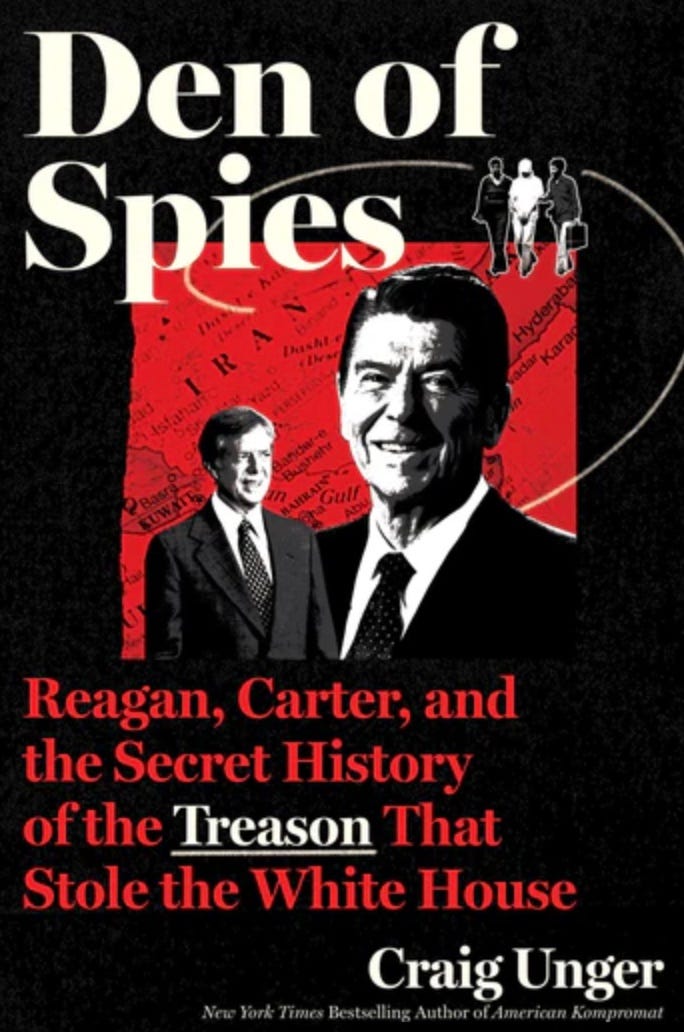
And don’t miss my most recent book, Den of Spies!
House of Trump, House of Putin
The Untold Story of Donald Trump and the Russian Mafia
American Kompromat
How the KGB Cultivated Donald Trump, and Related Tales of Sex, Greed, Power, and Treachery
Den of Spies
Reagan, Carter, and the Secret History of the Treason That Stole the White House
This is a sobering assessment. Read your book, “House of Trump, House of Putin”, way back when. It scared me then. I begged people I knew to read it; to pay attention. Some did, many did not…and here we are. We are not only caught in the net, but some have willingly jumped into it. I don’t know what to say anymore, because the drumbeat of authoritarianism has drowned out reasonable voices. Russia won without firing a shot.
I read all your books including Boss Rove. You, Sarah Kendzior and Aaron Good are all doing your best, and it truly puzzles me why all three of you don't get interviewed or amplified. Wait a minute, no it doesn't.