
#10 The Gorbachev Fixation(1988)
Trump was so obsessed with being a player on the world stage that he lied about meeting the Soviet leader.

After his October 1987 appearance in New Hampshire (see 1987 The New Manchurian Candidate), Trump’s presidential campaign—if that’s what it was—quickly came to an end.
But that didn’t mean he had abandoned his political ambitions.
From the moment Trump returned from the Soviet Union, he did everything he could to burnish his image as a statesman. He was aided in no small measure by The New York Times which reported, with no attribution, that while he had been in Moscow, Trump had “met with the Soviet leader Mikhail S. Gorbachev. The ostensible subject of their meeting was the possible development of luxury hotels in the Soviet Union by Mr. Trump. But Mr. Trump’s calls for nuclear disarmament were also well-known to the Russians.”
Wow. A meeting with Mikhail Gorbachev! “Well-known” views on nuclear disarmament!
That sure makes Trump sound like a statesman to me!
The New York Times— the paper of record, arguably the most powerful force in defining the national conversation—had just validated Donald Trump as an expert on nuclear disarmament who was capable of standing on the world stage with the likes of Mikhail Gorbachev.
But in fact, no such encounter ever took place. The New York Times report was untrue—leaked to the paper on “background” by an anonymous source—most likely Donald Trump himself. An expert on nuclear disarmament? Trump was nothing of the sort.
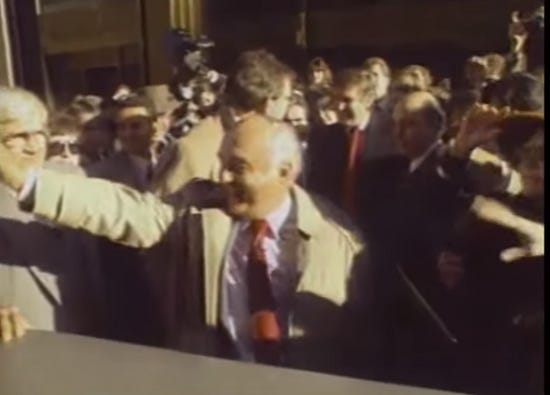
That said, he remained so eager for a meeting with the Soviet leader that on December 7, 1987, when a man resembling Gorbachev showed up unexpectedly at Trump Tower, the future president descended from his twenty-sixth-floor office and greeted him warmly, only to be widely derided later. He had fallen for an impostor, a Gorbachev look-alike, Ronald Knapp.
Moreover, according to Yuri Shvets, a former major in the KGB, Trump’s fixation on Gorbachev and his ever-changing characterizations of the Soviet leader strongly suggested that Trump was taking his cues about the Soviet leader from the KGB. Initially, when Gorbachev became general secretary in 1985, the hawkish Vladimir Kryuchkov, then head of the KGB’s First Chief Directorate, got along with the new Soviet leader far better than one might have thought. Widely admired in the West for facilitating the end of the Cold War, Gorbachev was loathed by the hawkish Chekist operatives in the KGB for precisely the same reformist policies that were leading to the collapse of the Soviet Union—which is why Kryuchkov later led a failed coup against Gorbachev.
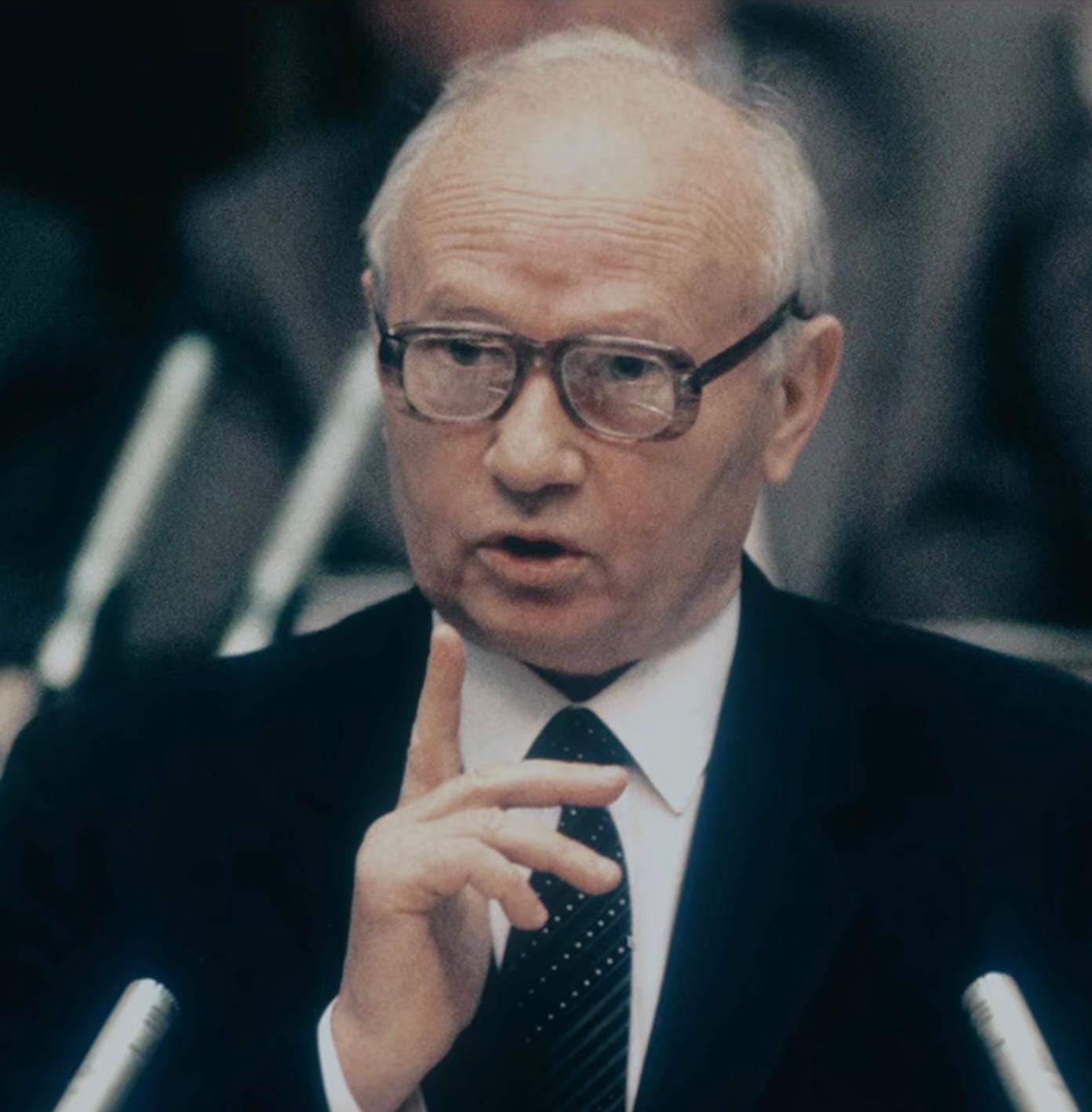
At the time, however, careerist considerations often took precedence, and, according to Shvets, Kryuchkov “was like a pussycat to Gorbachev, because he wanted to be promoted to the rank of four-star general.”
Shvets noted that Trump’s views about Gorbachev went hand in glove with those of the Soviet spy agency. When Gorbachev first appeared on the world stage, Trump, like Kryuchkov, had nothing but praise for him, and made no secret of it—pestering Nobel laureate Bernard Lown (see Master Negotiator, Man of Peace) and telling reporters about meetings with the great leader that had never even taken place.
In December 1988, when Gorbachev visited New York, Trump sent out word to the Washington Post and other outlets “that he had been contacted by Gorbachev’s office and informed that the Soviet leader wished to meet him and tour Trump Tower, his Fifth Avenue office-shopping-condo complex, when he comes to New York next week.”
As I wrote about it in American Kompromat:
‘‘It’s a great honor for me,’’ Trump told the New York Daily News. “His office called and said it was one of the places he wanted to see. Most likely, I’ll show him the atrium, maybe my office and a few apartments.”
But, as with Trump’s claim of meeting Gorbachev during his 1987 trip to Moscow, the New York meeting never took place. Gorbachev remembered that the Cold War was still on. How would it have looked for the leader of the communist world to promenade about in Trump’s Disneyland of conspicuous consumption and luxury goods? Trump remained so eager for a meeting, however, that on December 7, when a man resembling Gorbachev showed up unexpectedly at Trump Tower, the future president descended from his twenty-sixth-floor office and greeted him warmly, only to be widely derided later. He had fallen for an imposter, Gorbachev look-alike Ronald Knapp.
In an interview that took place in late 1989, however, Trump dramatically revised his opinion of Gorbachev. As he told Playboy, “Russia is out of control and the leadership knows it. That’s my problem with Gorbachev. Not a firm enough hand. . . . Yet Gorbachev is getting credit for being a wonderful leader—and we should continue giving him credit, because he’s destroying the Soviet Union.”
At a time when America was swooning over the Soviet leader, Trump put forth a startling prediction about Gorbachev: “I predict he will be overthrown because he has shown extraordinary weakness.”
The timing of Trump’s remark was critical. “It would have been a different story if Trump had changed his line on Gorbachev earlier,” said Yuri Shvets. “In 1989, only people inside the KGB could suggest someday Gorbachev would be overthrown, because in public he was in a strong position. Everything was fine. Everybody believed that Gorbachev will succeed. You couldn’t find anything saying that in the Soviet mass media in 1989.
“So if Trump said this in 1989, it’s an indication that he was fed information by somebody with inside knowledge of what was going on—namely, the KGB.” Meanwhile, Vladimir Kryuchkov had gotten his promotion to run the KGB in 1988 and was increasingly appalled at the declining status of the Soviet Union. By 1990, reformers and hard-liners alike had joined Kryuchkov in training their sights on Gorbachev, but for the most part such sentiments were closely held within the intelligence community and were not shared by the general public.
Cast of Characters
Mikhail Gorbachev
General Secretary of the Communist Party of the Soviet Union, known for glasnost and perestroika reforms. Admired in the West, loathed by KGB hardliners. Despite rumors, he never met with Trump, either in Moscow or New York.
Ronald Knapp
Gorbachev impersonator who visited Trump Tower in December 1987. Trump came down from his office to greet him, believing he was the real Soviet leader—only to be mocked in the press afterward.
Yuri Shvets
Former KGB major based in Washington, D.C. in the 1980s. Now a U.S. citizen, Shvets has provided key insights into Soviet asset recruitment. He identified Trump as having been cultivated as a “special unofficial contact” by the KGB—a status given to high-value individuals.
General Vladimir Kryuchkov
KGB hardliner and chief of the First Chief Directorate. In 1984, he ordered the aggressive recruitment of Western influential figures, including businessmen—particularly those with vanity, greed, and narcissism—fitting Trump’s profile perfectly.
Stay tuned for more updates!
If you have tips, leads, or insights, please reach out—I am always looking for new information. And don’t forget to comment and share your thoughts!
House of Trump, House of Putin
The Untold Story of Donald Trump and the Russian Mafia
American Kompromat
How the KGB Cultivated Donald Trump, and Related Tales of Sex, Greed, Power, and Treachery
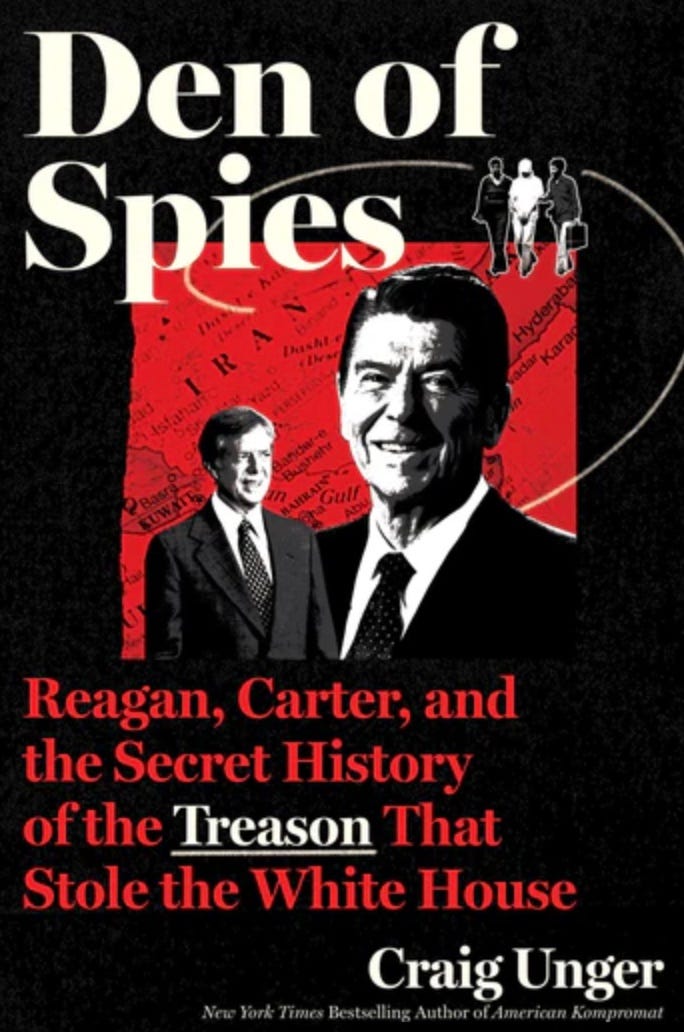
Den of Spies
Reagan, Carter, and the Secret History of the Treason That Stole the White House
Masha Gessen suggests in her 2012 book, "The Man Without a Face: The Unlikely Rise of Vladimir Putin," that Kryuchkov's attempted coup against Gorbachev was planned to fail.
Not that Gorbachev deserved such unfettered praise to begin with.
https://efdavies.substack.com/p/mikhail-gorbachev-and-russian-colonialism